
Cricket Batting Inners NZ: Full-Finger vs Fingerless
16 November 2026
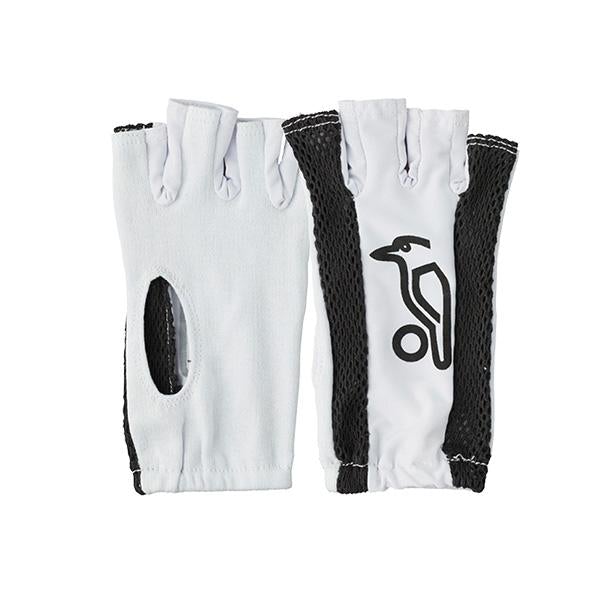
Batting inners are optional, but they can be useful if your hands sweat, the inside of your outer gloves feels rough, or you want a washable layer between your skin and your batting gloves. Full-finger inners cover more of the hand; fingerless inners leave the fingertips open and give a less enclosed feel. Neither replaces the padding in a proper batting glove. Choose the thinnest inner that sits smoothly without making the fingers or palm feel tight.
What batting inners actually do
A batting inner is a light glove worn underneath your regular batting glove. Its main job is to provide a comfortable layer against the hand and absorb some perspiration before it reaches the outer glove lining. Depending on the construction, it can also give you a smoother fabric layer between your skin and the outer glove.
Inners are not impact protection. The padding, finger sections, thumb and side protection still come from the outer batting gloves. If your gloves are damaged, poorly fitted or missing padding, an inner will not make them safe again.
You can compare the current batting inners range separately from the wider cricket batting gloves collection. They serve different jobs, so check that you are buying batting inners rather than wicketkeeping inners or another type of liner.
Full-finger or fingerless: which should you choose?
The choice is mostly about coverage and feel. A full-finger inner covers the fingertips as well as the palm, while a fingerless design leaves the ends of the fingers exposed. Neither style is automatically better; the right one is the style that stays comfortable inside your own outer gloves.
| Style | Coverage | Why choose it | Trade-off to check |
|---|---|---|---|
| Full-finger | Palm and fingers are covered. | A continuous fabric layer may suit players who prefer coverage across the whole hand. | Check that the fingertips do not bunch inside the outer glove. |
| Fingerless | Palm is covered while the fingertips remain open. | Useful if you prefer direct fingertip contact and less fabric around the ends of the fingers. | Some players prefer more coverage than this style provides. |
Kookaburra describes its full-finger model as having full-finger coverage, a cotton palm and an elasticated wristband. Its fingerless model uses a cotton palm, an elasticated wristband and a Lycra and mesh back. Read the maker's specifications for the full-finger batting inner and the fingerless batting inner before choosing.
Measure your hand before choosing a size
Do not choose an inner by age alone. Measure the hand and compare the result with the size chart for the exact brand. Kookaburra's published method is to measure in a straight line from the start of the wrist to the tip of the longest finger. Keep the hand relaxed and use the same method each time.
| Kookaburra size reference | Hand length |
|---|---|
| Extra Small Junior | Below 14.5 cm |
| Small Junior | 14.5–16 cm |
| Junior | 16–17.5 cm |
| Youth | 17.5–19 cm |
| Small Adult | 19–20 cm |
| Adult | 20–21.5 cm |
| Oversize Adult | 21.5 cm and above |
This is Kookaburra's reference, not a universal chart for every manufacturer. Other brands may use different labels or measurements, and the product's own size options take priority. If the measurement sits on a boundary, try the inner inside your actual batting glove before deciding. A junior player who is growing still needs a fit that works now, not a size chosen only to last another season.
For a second check, use the store's cricket gloves and batting pads size calculator, then compare the result with the manufacturer's chart on the product page.
How should batting inners feel under the outer glove?
The inner should sit close to the hand without pulling at the wrist or leaving loose fabric at the fingertips. Put on the inner first, then your normal batting glove. Close your hand around a bat handle and open it again. The fingers should bend naturally, the palm should not fold into a ridge, and the outer glove should not feel noticeably tighter than it does without the inner.
- Check the fingertips: fabric should not gather at the ends or push your fingers backwards.
- Check the palm: there should be no thick fold where the handle sits.
- Check the wrist: the cuff should stay in place without digging into the skin.
- Check the outer glove: the padding should still sit in the right place and your fingers should move freely.
If the outer glove becomes tight, do not force the combination. Try a thinner inner or wear the outer glove on its own. A second layer that changes the fit is not automatically an improvement.
When are batting inners useful, and when can you skip them?
Inners can be worth trying if you sweat heavily, prefer a fabric layer against your skin, or want a separate item that can be removed and washed after training. They are also useful for players who dislike the feel of the outer glove lining directly against their hands.
You can skip them if your batting gloves already feel comfortable, if an inner makes the fingers too tight, or if you prefer the direct feel of the outer glove. There is no rule that every batter must wear inners. Comfort and correct fit matter more than adding another item to the kit bag.
Inners are not the same as wicketkeeping inners. Wicketkeeping products are designed to be used with wicketkeeping gloves and may have different palm construction or cushioning. Choose the batting product for batting gloves and check the product description if the intended use is not clear.
Care for batting inners
Take the inners out of your outer gloves after a session and let them dry naturally before putting them away. Follow the manufacturer's washing instructions for the fabric. Do not leave damp inners sealed inside a kit bag, and avoid direct heat from a heater or hot-air dryer unless the care label specifically allows it.
If you train often, having a spare pair means you can rotate between sessions while the other pair dries. Replace an inner when the fabric becomes thin, the seams open, the cuff loses its shape or it no longer sits smoothly under the outer glove.
Current batting inner options at NZ Cricket Store
The current range includes different constructions and price points. Check the live variant options before ordering, as sizes and availability can change:
- Kookaburra Batting Inners — a full-finger style listed with Junior and Youth options.
- Kookaburra Fingerless Inner Gloves — a fingerless option with Youth and Adult variants listed.
- DSC Motion Inner Batting Gloves — another current batting-inner option; check its product page for the available size and material details.
For younger players, the junior cricket gloves collection is a useful place to compare the outer gloves that will be worn over the inner. Choose the inner and outer glove as a pair rather than sizing each in isolation.
Frequently asked questions
Do you need batting inners under cricket gloves?
No. They are optional. Some players like the extra fabric layer and perspiration absorption; others prefer the feel of the outer glove on its own.
Should batting inners be tight?
They should be close-fitting but not restrictive. Avoid bunching at the fingertips, a folded palm or a cuff that digs into the wrist.
Are fingerless inners better for grip?
Not for every player. Fingerless styles leave the fingertips open, which some batters prefer. The choice is about feel and fit, not a guaranteed performance advantage.
Can I use wicketkeeping inners for batting?
Do not assume they are interchangeable. Check the product's intended use and construction. Choose a batting inner designed to sit comfortably beneath batting gloves.