
Cricket Thigh Guards: Single or Combo for Club Batting?
13 November 2026
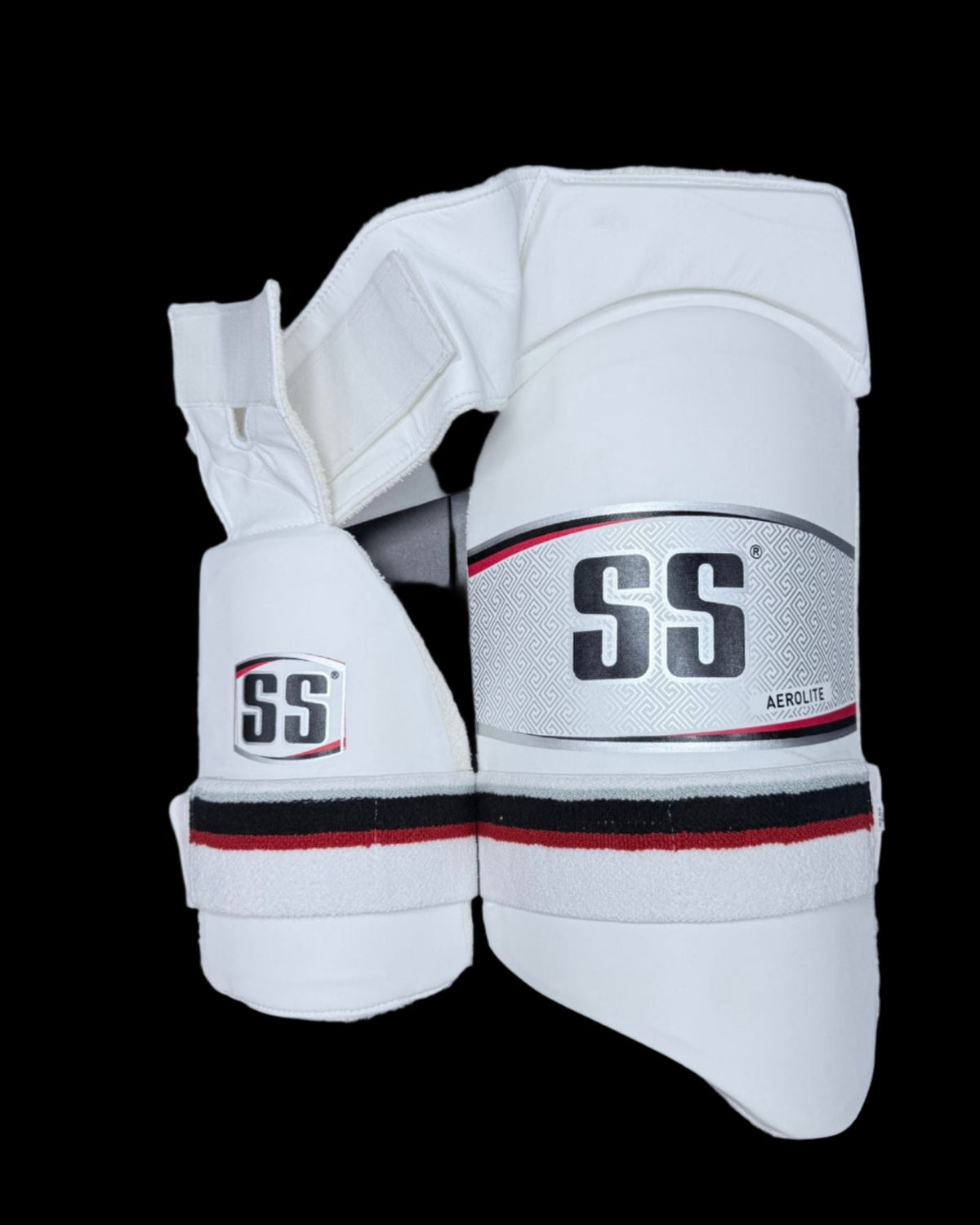
Choose a single cricket thigh guard if you want coverage over the leading thigh and can keep it securely in place. Choose a combo guard if you also want an inner-thigh panel and are willing to check the extra straps, orientation and movement. Neither format is automatically right for every batter. The useful test is whether the guard covers the intended area, stays put through a stance and run, and works with your batting pads and clothing.
What does each design cover?
A single thigh guard is one main protective panel. It normally sits on the outside of the leading thigh, where a ball can strike a batter who misses or misjudges a delivery. A combo design pairs that main panel with a smaller inner-thigh panel. The exact shape and attachment method vary by model. A thigh guard does not replace an abdominal guard, batting pads or a helmet.
The SG Super Test Cricket Thigh Pad is a current single-panel example. Shopify lists a Junior Right Handed variant and an Adult Left Handed variant; check the selected size and batting side rather than assuming that every combination is available. For a combo example, the SS Aerolite Cricket Batting Combo Thigh Guard lists youth right-handed and adult right- and left-handed options. Both products must be fitted to the individual, regardless of their size label.
| Decision | Single guard | Combo guard |
|---|---|---|
| Coverage | One main thigh panel | Main thigh panel plus an inner-thigh panel |
| Fit checks | Panel position, strap security and freedom to move | All single-guard checks, plus inner-panel position and connection between panels |
| Likely trade-off | Fewer parts to position | More coverage to assess, with more to adjust |
| Before ordering | Confirm size and any batting-side option | Confirm size, batting side and which panels are included |
These are design differences, not a ranking of safety or performance. A poorly positioned combo can leave a gap, while a single guard that moves during play may fail to cover the spot you intended.
Who should consider a combo thigh guard?
A combo is worth considering for a batter who wants inner-thigh coverage as well as a main thigh panel, particularly in regular hard-ball cricket. The ECB recreational safety guidelines, updated in December 2025, identify the thigh as an injury area in recreational cricket and say a thigh pad helps protect it. That guidance supports considering thigh protection; it does not prove that every player needs a combo or that any specific model prevents injury.
For players who prefer a single guard, the priority is still correct coverage and stable fit. A player may also have a separate inner-thigh guard already. Check what is in the kit before buying a second system.
Fit the guard before judging it
Start with size and batting side
Use the cricket thigh-pad size calculator for a starting size, then confirm the specific product's guide. Height alone cannot establish fit: thigh circumference, leg length, guard shape and clothing layers all matter. Where Shopify offers right- and left-handed variants, select the batter's actual batting side. Do not treat a right-handed option as interchangeable with a left-handed one unless the product explicitly says it is ambidextrous.
Size labels are not standardised across makers. For example, SG's Combo Ace product specification describes a thigh-and-inner-thigh construction and separate handed options. The store's available SG Combo Ace Protector variant is Adult Left Handed in white. Match the actual variant on the product page; do not infer that the other manufacturer sizes or hands are currently stocked.
Put it on with the rest of the kit
- Wear the trousers and batting pads you expect to use in a match.
- Set the main panel over the leading thigh. It should cover the intended area without sitting on the kneecap or digging into the hip crease.
- If it is a combo, position the smaller panel over the inner thigh. Check for a gap, twisting or overlap that makes the stance awkward.
- Fasten the waist and thigh straps so the panels stay in place without cutting in. Check the closures after tightening.
- Take your normal stance, make a controlled backlift, bend to defend and walk or jog a few steps. If the guard rotates, slips or catches the batting pad, adjust it or try another size or shape.
For a junior, repeat that movement check as the player grows. Buying a much larger guard “to grow into” can leave protection in the wrong place now. The youth thigh-pad range and adult thigh-pad range let you compare current sizes, but the product-specific fit still decides.
Common buying mistakes
- Choosing only by age: two players of the same age can need different guard sizes and strap adjustment.
- Using the lowest displayed price as the size you need: a product can have different prices or availability by variant. Select the exact size and hand before comparing.
- Assuming “combo” means the same coverage on every model: inspect the actual inner panel and how it sits when worn.
- Trying the guard without batting pads: a guard that feels fine alone may catch the pad during running or a low stance.
- Ignoring wear: inspect straps, closures, seams and the panel before play. Replace equipment that cannot stay in position or is visibly damaged.
If you are rebuilding more of a batting kit, the cricket guards and pads collection shows thigh, abdominal and other protective options in one place. Choose each piece for its own intended area and fit.
Questions players and parents ask
Does a right-handed batter need a right-handed thigh guard?
When a product is sold in handed variants, choose the option labelled for the batter's batting side. Check how its panels sit when worn. An ambidextrous model is a different case and should say so explicitly.
Can a single thigh guard be used for club hard-ball cricket?
Yes, if it fits, covers the intended thigh area and meets any club or competition requirements. A combo adds an inner panel; it is not a universal rule for all club batters. Ask your club what protection it requires for your grade.
Should the guard sit above or below the batting pad?
The thigh panel belongs on the thigh, above the kneecap, while the batting pad covers the lower leg and knee. Wear both together and check that neither shifts or catches during a normal stance and short run.
Is a more expensive combo automatically more protective?
Price does not establish protection for an individual player. Compare the areas covered, construction stated by the maker, size, handedness and how securely the guard sits. No guard removes the risk of injury.